How Much Does Retaining Walls Cost?
What Determines the Cost of a Retaining Wall
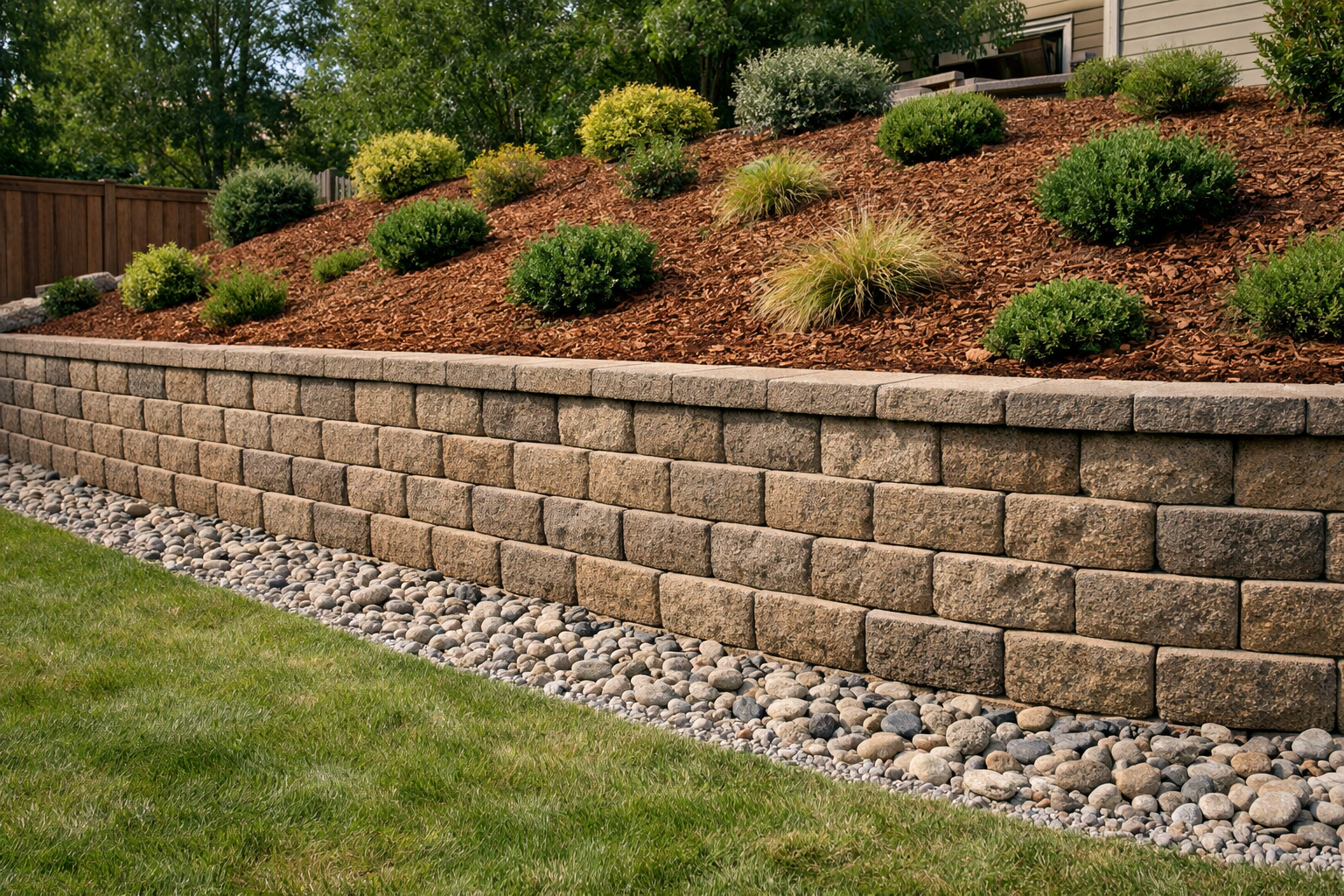
Retaining walls do real structural work: they hold back soil, manage drainage, and keep slopes from eroding or collapsing onto a patio, driveway, or neighbor's yard. Because of that job, their price depends on more than just how the wall looks. A short decorative wall along a flower bed and a tall engineered wall holding back a hillside are priced in completely different ways, even though both are technically "retaining walls."
The main cost drivers include:
- Material: Pressure-treated timber, segmental concrete block, poured concrete, natural stone, and brick all have different material and labor costs.
- Wall height and length: Cost is usually calculated per square foot of wall face, so taller or longer walls cost more overall. Height also affects engineering requirements.
- Soil and site conditions: Rocky soil, poor drainage, or a steep slope can increase excavation time and the amount of base material needed.
- Drainage and backfill: Proper gravel backfill, perforated drain pipe, and filter fabric add cost but prevent water pressure from cracking or toppling the wall later.
- Engineering and permits: Walls taller than about 3–4 feet often require an engineer's stamp and a building permit in many jurisdictions.
- Access and labor: Walls in tight backyards or areas that require hand-digging or material carrying cost more than walls accessible by machinery.
- Finishing details: Caps, curves, steps, lighting, or seating built into the wall all add labor and material cost.
Typical Retaining Wall Cost Ranges
Costs vary significantly by region, material, and wall complexity, but here are general US ranges homeowners can use as a starting point:
- Low end ($15–$25 per square foot): Basic pressure-treated timber or simple segmental block walls, low height (under 3 feet), easy access, minimal drainage work.
- Average range ($25–$50 per square foot): Segmental concrete block or poured concrete walls of moderate height (3–5 feet), with proper gravel backfill and drainage pipe.
- High end ($50–$75+ per square foot): Natural stone, engineered walls over 5 feet tall, walls requiring permits and engineering review, difficult access, or extensive drainage and grading work.
For a typical residential project, many homeowners end up spending somewhere between $3,500 and $15,000 total, but larger hillside stabilization projects or long walls can run well beyond that. Always treat these as general ranges — your actual quote will depend on your yard, local labor rates, and material availability in your area.
How Material Choice Affects Price
Pressure-treated timber is usually the least expensive option up front but has a shorter lifespan, often 15–20 years, before it begins to rot or warp. Segmental concrete block systems are a common middle-ground choice — they're interlocking, don't require mortar, and come in many styles. Poured concrete and natural stone tend to be the most expensive but offer long lifespans and a more custom appearance. Brick falls somewhere in between, depending on design complexity.
Ways to Save on a Retaining Wall Project
Retaining walls aren't usually a place to cut corners on structure or drainage, but there are still legitimate ways to manage cost:
- Keep height under the permit threshold when possible. Walls under the local permit height (often 3–4 feet) typically avoid engineering fees.
- Choose segmental block over natural stone or poured concrete if the look still fits your landscape design.
- Combine terraced shorter walls instead of one very tall wall — this can sometimes reduce engineering requirements and spread cost over phases.
- Schedule during a landscaper's slower season (often late fall or winter in many regions) when labor may be more available.
- Get multiple quotes so you can compare pricing, included drainage work, and warranty terms rather than assuming the lowest bid is the best value.
- Avoid skipping drainage to save money — a wall that fails from water pressure will cost far more to repair or rebuild than the drainage work would have cost initially.
If you're ready to get pricing for your yard, it's worth reaching out to a few retaining walls landscapers near you so you can compare how they approach drainage, materials, and height on your specific site.
What a Fair Quote Should Include
A detailed, trustworthy retaining wall quote should spell out more than just a total price. Look for:
- Material specifications: block or stone type, wall cap, and any reinforcement used.
- Excavation and base prep details: depth of excavation and type/depth of compacted base material.
- Drainage plan: gravel backfill, drain pipe, and where water will be directed.
- Height and length measurements matching what was discussed on site.
- Permit and engineering responsibility: who pulls the permit and whether engineering is included or billed separately.
- Timeline: estimated start and completion dates, including weather contingencies.
- Warranty terms: what's covered if the wall settles, cracks, or drains poorly after installation.
- Cleanup and site restoration: grading, seeding, or sod repair after construction.
Since pricing structures and included services can differ a lot between contractors, it's a good idea to compare local landscapers side by side before committing to a project this size.
FAQ
How long does a retaining wall typically last?
It depends on material: pressure-treated timber often lasts 15–20 years, segmental concrete block and poured concrete can last 30–50 years or more, and natural stone walls can last even longer when properly built with good drainage.
Do I need a permit to build a retaining wall?
Many areas require a permit once a wall exceeds a certain height, often around 3–4 feet, and taller walls may also need an engineer's review. Requirements vary by city and county, so it's best to check with your local building department or ask your contractor to confirm.
Why is drainage so important in a retaining wall?
Soil holds water, and that water creates pressure against the back of a wall. Without proper gravel backfill and a drain pipe to release that pressure, walls can bulge, crack, or fail over time — even if the wall looks sturdy at first.
Can I build a retaining wall myself to save money?
Short decorative walls under about 2 feet are sometimes manageable as DIY projects with segmental block systems. However, taller walls, slopes with drainage issues, or any wall supporting a structure (like a driveway or patio) are usually best left to professionals, since mistakes can be costly to fix later.
If you're planning a retaining wall project, the best next step is to request free quotes from a few local landscapers on CGMIMM. Comparing their materials, drainage plans, and pricing side by side will help you find a fair price and a contractor you trust for the job.