Drainage & Grading: A Complete Guide for Homeowners
What Is Drainage & Grading?
Drainage and grading work together to control where water goes on your property. Grading is the process of shaping the soil so that water flows away from your home, patios, and other structures instead of pooling against them. Drainage systems—like French drains, catch basins, and downspout extensions—capture and redirect water that grading alone can't handle, especially in heavy rain or on tricky lots.
When these two elements are done correctly, you get a yard that sheds water efficiently, protects your foundation, and keeps lawns and planting beds from turning into mud pits. When they're done poorly (or not at all), homeowners often deal with basement leaks, eroded slopes, dead grass, and standing water that attracts mosquitoes.
Signs You Might Need Drainage or Grading Work
- Puddles that sit in the yard for more than a day after rain
- Water pooling near your foundation or in your crawl space
- Soggy, mushy lawn areas even during dry weeks
- Erosion gullies or bare patches where soil has washed away
- A sloped yard that sends water toward your house instead of away from it
- Mulch or landscaping materials constantly washing out during storms
What's Involved in a Drainage & Grading Project
Site Assessment
A landscaper typically starts by walking the property to identify low spots, slope direction, soil type, and where water is currently going. Some pros use levels or laser tools to map elevation changes precisely.
Grading the Land
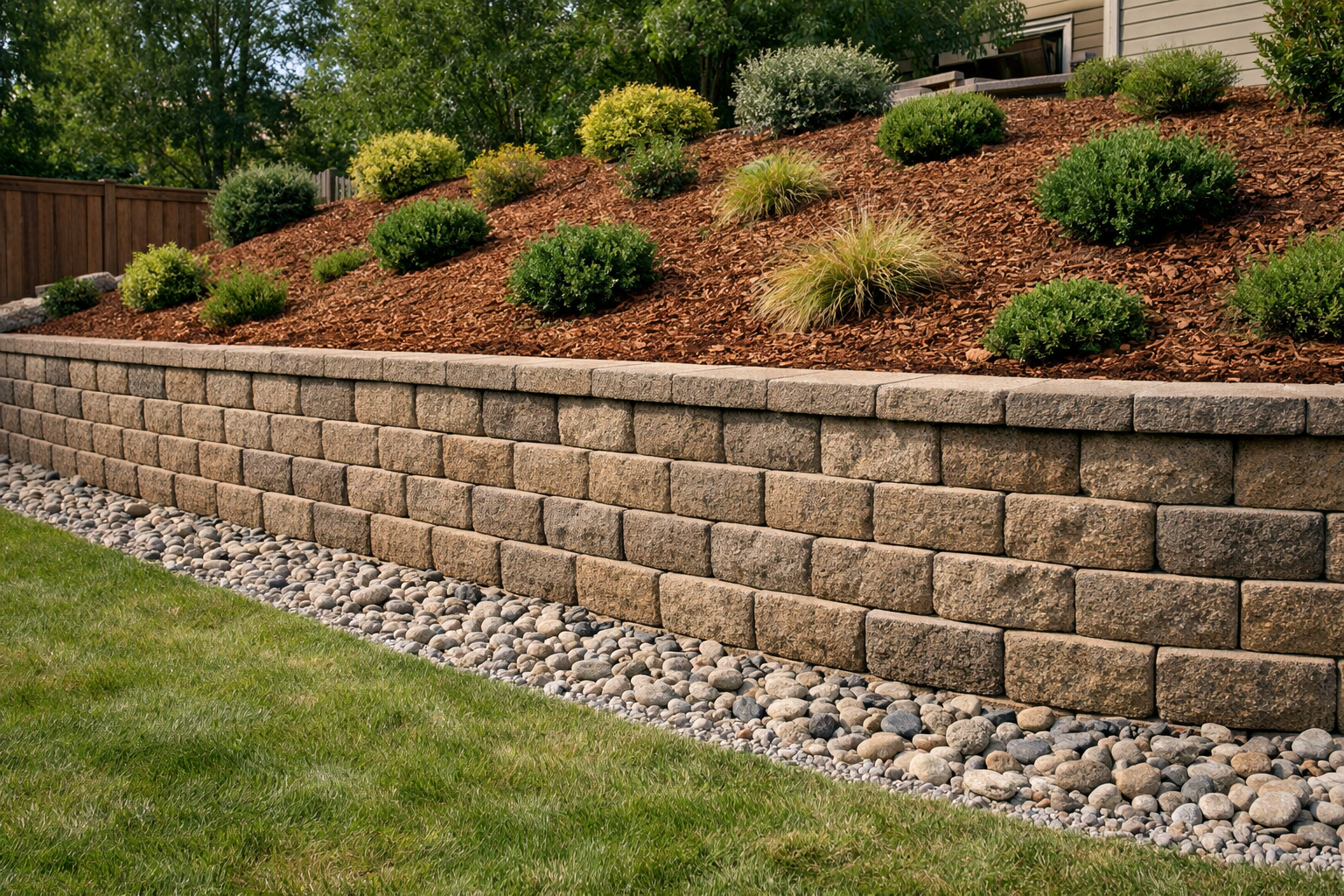
This often involves adding or removing soil to create a gentle slope—usually a drop of about 1 inch per foot for the first several feet away from the house—so water moves away from the foundation naturally.
Installing Drainage Solutions
Depending on the yard, this may include:
- French drains: underground perforated pipes surrounded by gravel that redirect water to a safe discharge point
- Catch basins: grated boxes that collect surface water and funnel it through underground pipes
- Dry wells: underground chambers that allow collected water to slowly absorb into the soil
- Downspout extensions: pipes that carry roof runoff several feet away from the house
- Swales: shallow, grassy channels that guide surface water along a planned path
Final Grading and Restoration
After drainage features are installed, the area is regraded, topsoil is added back, and the yard is reseeded, sodded, or replanted so it looks finished rather than freshly dug up.
Typical Cost Ranges
Costs vary widely depending on your region, yard size, soil conditions, and how much drainage infrastructure is needed. As general U.S. ballpark figures:
- Basic regrading of a small yard: roughly $1,000–$3,000
- French drain installation: roughly $10–$25 per linear foot, often totaling $1,500–$6,000 for a typical residential run
- Catch basin or dry well installation: roughly $500–$2,000 per unit, depending on depth and pipe length
- Full-property drainage and grading overhaul: roughly $5,000–$15,000+ for larger or more complex lots
These are general estimates only—actual pricing depends on your soil, slope, access for equipment, and local labor rates. Getting a few quotes is the best way to understand what your specific project will cost.
How Long Does It Take?
Smaller grading or single-drain projects often wrap up in a day or two. More involved jobs—like installing a drainage system across a sloped backyard, adding multiple catch basins, or regrading an entire lot—can take anywhere from three days to two weeks. Weather, soil conditions, and whether permits are required can all affect the timeline. Rocky soil or high water tables sometimes slow things down and add cost.
Permits and Regulations
Many municipalities require permits for grading changes or drainage systems that discharge water onto neighboring properties or into storm systems. Some areas also have rules about altering natural water flow, especially near wetlands or floodplains. A reputable landscaper should know local requirements and handle permitting as part of the project, but it's worth confirming this before work begins.
How to Hire the Right Landscaper for Drainage & Grading
Look for Relevant Experience
Drainage and grading require more technical know-how than typical lawn or planting work. Ask contractors how many similar projects they've completed and request examples or references.
Get Multiple Written Estimates
Prices and recommended solutions can vary significantly between contractors. Getting at least two or three quotes helps you compare pricing, proposed methods, and materials.
Ask About the Diagnosis, Not Just the Fix
A good landscaper should explain why water is behaving the way it is on your property, not just propose a generic solution. If a contractor wants to install a French drain without first assessing your grading, that's a red flag.
Confirm Warranties and Follow-Up
Ask whether the work comes with a warranty, and what happens if drainage issues persist after installation. Reputable pros stand behind their grading and drainage work for at least a year.
Check Reviews and Licensing
Verify that the company is licensed and insured where required, and look at recent customer reviews for feedback specifically about drainage work, not just general landscaping.
If you're ready to start, you can browse drainage & grading landscapers near you to see local options, read reviews, and request quotes.
FAQ
Can I fix minor drainage issues myself?
Small fixes—like adding downspout extensions or regrading a minor low spot with a few bags of topsoil—are often doable as a DIY project. However, larger grading changes or drainage systems that involve pipes, slope calculations, or permits are usually best left to a professional to avoid making the problem worse.
Will drainage work damage my existing lawn or landscaping?
Some disruption is normal, especially where trenches are dug for pipes or where soil is added or removed. A good contractor will restore the affected areas with topsoil, seed, or sod once the work is complete, so the yard looks finished rather than torn up.
How do I know if my drainage problem is related to grading or something else?
Grading issues usually show up as water pooling on the surface or flowing toward the house. If water is appearing in a basement or crawl space without obvious surface pooling, there could be additional factors like foundation cracks or a high water table, which may require a combined approach from a landscaper and a foundation specialist.
Does drainage and grading work affect my home's resale value?
Proper drainage can help protect your foundation and landscaping investment over time, and a yard free of standing water or erosion is generally more appealing to buyers. While it's hard to put an exact number on resale value, unresolved drainage problems are a common concern that can slow down a sale or come up during inspections.
If you're dealing with drainage or grading issues, it's worth getting a few free quotes from local landscapers on CGMIMM to compare solutions and pricing before you commit. You can compare local landscapers to find the right fit for your project.