Tree Services: A Complete Guide for Homeowners
What Are Tree Services?
Tree services cover the care, maintenance, and removal of trees on residential or commercial property. This includes everything from routine pruning that keeps a tree healthy and attractive, to emergency removal after storm damage, to stump grinding once a tree is gone. Unlike general lawn care, tree work often requires specialized equipment, training, and in some cases, certified arborists who understand tree biology and safe cutting techniques.
Healthy trees add shade, privacy, and curb appeal to a property. But trees that are diseased, overgrown, or structurally weak can pose real risks to roofs, power lines, fences, and people. That's why most homeowners eventually need some form of professional tree care, whether it's a one-time cleanup or an ongoing maintenance plan.
What's Involved in Tree Services
Tree care is a broad category. Depending on your yard and the condition of your trees, a project might include one or several of the following:
- Pruning and trimming: Removing dead, damaged, or overcrowded branches to improve tree health, shape, and safety.
- Tree removal: Cutting down a tree that's dead, dying, diseased, or simply in the wrong location.
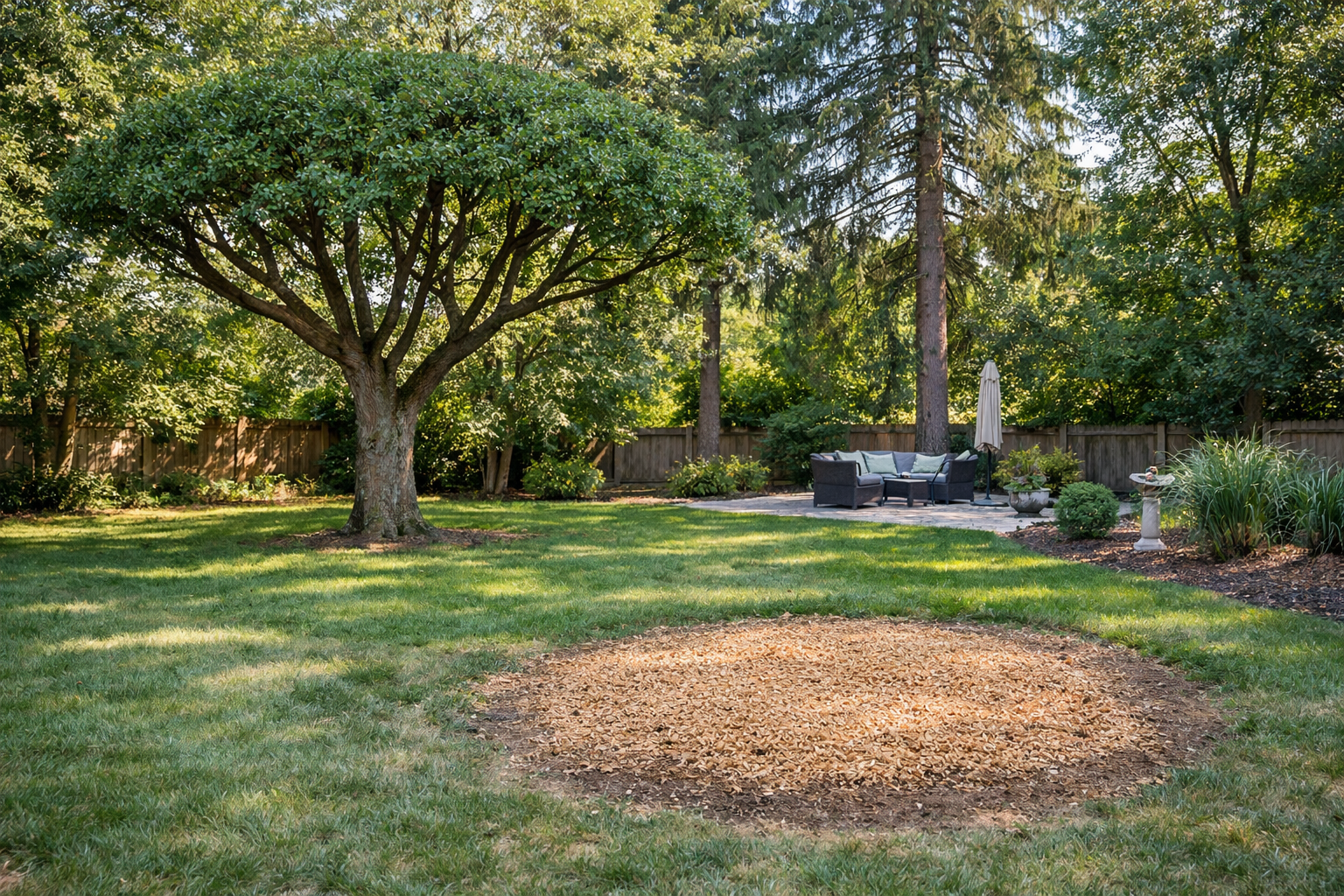
- Stump grinding or removal: Eliminating the leftover stump after a tree is cut down, either by grinding it below ground level or fully excavating the root system.
- Tree health assessments: Diagnosing pest infestations, fungal disease, or root issues before they spread or cause a tree to fail.
- Cabling and bracing: Supporting weak limbs or split trunks to prevent breakage.
- Emergency storm cleanup: Removing fallen limbs or entire trees after high winds, ice, or heavy rain.
- Land clearing: Removing multiple trees and brush to prepare a lot for construction, landscaping, or fire-safety buffers.
Most reputable companies will start with an on-site inspection to evaluate the tree's size, condition, location relative to structures or power lines, and any access challenges before giving you a firm quote.
Signs You May Need Tree Service
- Large dead or broken branches hanging over your roof, driveway, or walkway
- Visible fungus, cavities, or peeling bark on the trunk
- A tree leaning more than it used to, especially after a storm
- Roots lifting sidewalks, driveways, or foundations
- Branches growing into power lines
- A tree that hasn't leafed out normally in spring
Typical Cost Ranges
Tree service pricing varies widely based on tree size, species, location, accessibility, and your region. These general US ranges can help you budget, but always get a written quote for your specific property:
- Pruning or trimming: $150–$900 per tree, depending on height and the amount of work needed
- Small to medium tree removal: $300–$1,200
- Large tree removal: $1,000–$3,000 or more, especially if the tree is near structures or power lines
- Stump grinding: $75–$400 per stump, depending on diameter
- Emergency removal after a storm: Often 1.5x to 2x normal rates due to urgency and risk
- Land clearing: Typically priced per acre and can range from a few thousand dollars to well over $10,000 for larger lots
Factors that push costs higher include difficult access (tight side yards, no truck access), trees close to power lines or buildings, multiple trunks, and the need for a crane. Some companies offer discounts if you bundle pruning, removal, and stump grinding into one visit.
How Long Does Tree Service Take?
Timing depends on the scope of work:
- Routine pruning: A few hours for one or two trees
- Single tree removal: Half a day to a full day, depending on size and complexity
- Stump grinding: Usually completed within an hour or two per stump
- Multi-tree removal or land clearing: Several days to a couple of weeks
- Emergency storm response: Immediate safety hazards are often handled within 24–48 hours, though full cleanup may take longer during busy storm seasons
Weather, permit requirements, and crew availability can all affect scheduling, so it's smart to book non-emergency work a few weeks in advance, especially in spring and fall when demand is high.
How to Hire the Right Tree Service Professional
Not all tree companies offer the same level of training or insurance coverage, and tree work carries real safety risks. Here's how to vet a provider before signing a contract:
- Confirm licensing and insurance. Ask for proof of liability insurance and workers' compensation. This protects you if equipment damages your property or a worker is injured on-site.
- Look for certified arborists. For tree health diagnosis, pruning strategy, or work near valuable or historic trees, a certified arborist brings specialized expertise beyond basic cutting.
- Get multiple quotes. Prices can vary significantly between companies for the same job, so comparing at least two or three estimates helps you avoid overpaying.
- Ask about equipment and crew size. Larger jobs near structures may require cranes or bucket trucks. Make sure the company has the right equipment for your specific tree, not just a chainsaw and a truck.
- Check reviews and past work. Look for consistent feedback on punctuality, cleanup, and communication, not just the final cut.
- Get everything in writing. A clear contract should spell out scope of work, debris removal, cleanup, timeline, and total cost before work begins.
- Be cautious with door-to-door offers. After storms, unlicensed crews sometimes go neighborhood to neighborhood offering cheap, rushed work. Verify credentials before hiring anyone on the spot.
If you're ready to start, you can browse tree services landscapers near you to see local options, read reviews, and request quotes. If your project also includes other yard work like grading, planting, or hardscaping, you can compare local landscapers across multiple categories in one place.
FAQ
Do I need a permit to remove a tree on my property?
It depends on your city or county. Many municipalities require a permit for removing large or protected trees, especially certain native or heritage species. A reputable tree service can often help you determine whether a permit is needed and may handle the application on your behalf.
Is it cheaper to remove a tree myself?
DIY removal can save money upfront, but it's risky without proper training and equipment, especially for anything beyond a small sapling. Falling limbs, chainsaw accidents, and property damage are common with amateur attempts. For anything near power lines, structures, or over a certain height, hiring a professional is strongly recommended.
How often should trees be pruned?
Most mature trees benefit from pruning every 2–3 years to remove dead or weak branches and maintain healthy structure. Younger trees may need more frequent shaping in their first few years, while certain species, like fruit trees, often require annual pruning for best health and yield.
What happens to the wood and debris after a tree is removed?
This varies by company and should be clarified upfront. Some services include full cleanup and haul-away of branches, logs, and wood chips in their quote, while others charge extra or leave cut wood on-site if you want to keep it for firewood. Always confirm debris removal terms before work begins.
Whether you need a single tree pruned or a full property cleared, getting a few free quotes from local landscapers on CGMIMM is the easiest way to compare pricing, availability, and reviews before you commit.